Contact Us

If you have any questions about the services we provide simply use the form below. We try and respond to all queries and comments within 24 hours.

    captcha

    How to Rent a Motorcycle in Nepal (Complete Expert Guide for 2026)

    Nepal is a dream destination for motorcycle enthusiasts. With dramatic Himalayan backdrops, winding mountain highways, and culturally rich cities, exploring Nepal on two wheels offers an unforgettable adventure. Get an idea to open a key “How to rent a motorcycle in Nepal”.

    However, renting a motorcycle in Nepal requires more careful planning than in the UK or Europe. Standards vary widely between providers, insurance coverage is often limited, and bike condition can differ significantly.

    This expert guide will help you rent a motorcycle in Nepal safely, legally, and confidently — while avoiding the most common tourist mistakes.

    Cities You Get Rental Providers in Nepal

    Motorcycle rental businesses are mainly located in Nepal’s major tourist hubs.

    The Kathmandu and Lalitpur (Patan) — is the best place in Nepal to rent a motorcycle because it offers:
    • The widest range of bikes
    • Better mechanical support
    • Professional rental companies
    • Easier access to mountain routes

    For example, Bikemandu.com, based in Nakkhu, Lalitpur, operates within the Kathmandu Valley and focuses specifically on motorcycle adventures and rentals for international riders.

    Best for: Mustang, Annapurna, Everest region rides.

    Pokhara: Pokhara is popular for short scenic rides around the Annapurna region.
    • Relaxed riding environment
    • Easy pickup near Lakeside
    • Good for short trips

    Limitation:

    • Limitations
    • Fewer high-capacity bikes
    • Limited backup support
    • Not ideal for major expeditions
    Other Cities (Limited Options)

    Places like Chitwan, Butwal, and Nepalgunj have some rentals, but mostly scooters and small bikes.

    Expert tip: For any serious Himalayan ride, always rent from Kathmandu Valley.

    Types of Motorcycles You Find on Rental in Nepal

    Choosing the right category of motorcycle is essential for both safety and comfort.

    Royal Enfield Motorcycles (Most Popular Choice)

    Royal Enfield models dominate Nepal’s rental market. Common models are listed below.

    These bikes are widely used by professional operators such as Bikemandu because they handle Nepal’s mixed terrain well. Best for

    Finding the Right Rental Provider

    This step determines whether your trip will be smooth or stressful. Established Kathmandu Valley operators like Bikemandu focus on maintained fleets and rider support, which is especially important for Himalayan routes.

    A reliable provider should offer:

    • Government registration
    • Clear rental agreement
    • Well-maintained fleet
    • Helmet and safety gear
    • Emergency support
    • Transparent pricing
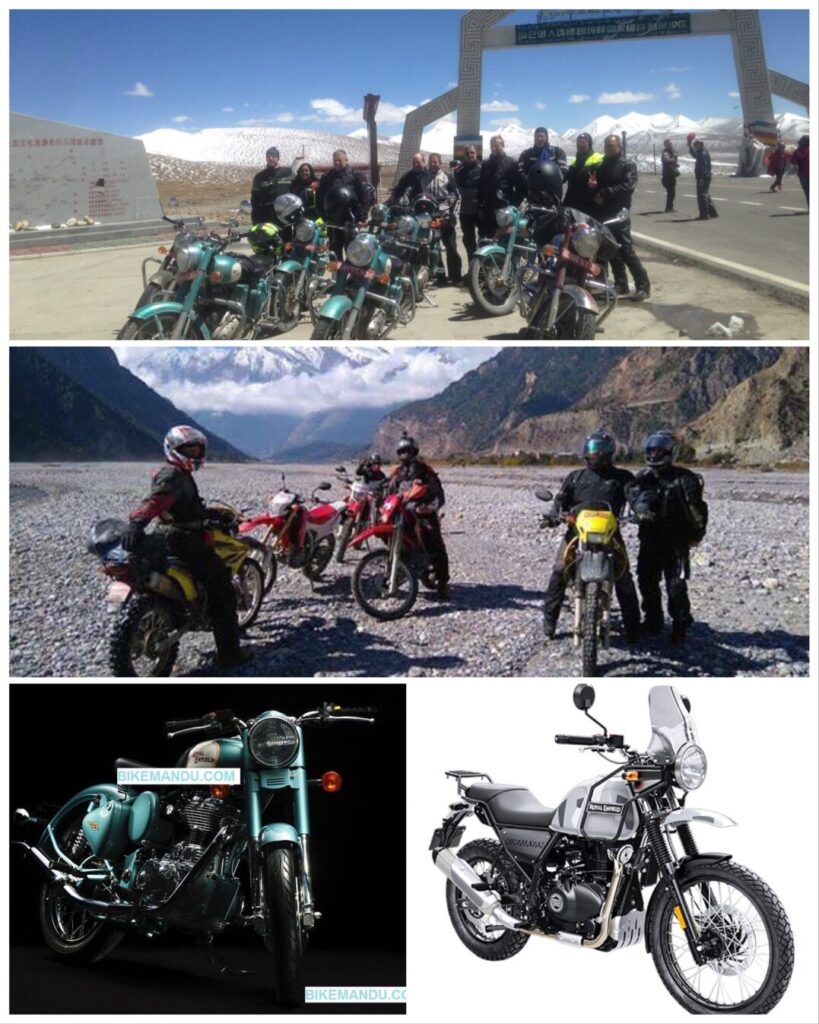
    Motorcycle rentals in Nepal with Royal Enfield and adventure bikes ready for Himalayan rides

    Well-maintained Royal Enfield Himalayan, Classic 350, Honda CRF available for rent in Nepal

    Choosing the Right Motorcycle for Your Route
    Many riders underestimate Nepal’s terrain.

    Use this quick guide:

    City sightseeing: 125–160cc scooter

    Pokhara to Mustang / mountain highways: Minimum 350cc or Himalayan

    Serious off-road adventure: Dual-sport required

    Riding with pillion: Minimum 350cc strongly recommended

    Golden rule: Always choose slightly more power than you think you need.

    Finding a Good Rental Motorcycle (Inspection Checklist)

    Before you accept the bike, inspect it carefully.

    Must-check items

    • Tyre tread depth
    • Front and rear brakes
    • Chain condition
    • Engine sound at idle
    • Lights and indicators
    • Clutch smoothness
    • Suspension leaks

    Smart move: Record a walk-around video before leaving.

    Getting the Best Deal on Motorcycle Rental in Nepal

    Prices are often negotiable.

    Ways to save money

    • Rent for multiple days
    • Book before peak seasons (Oct–Nov, Mar–Apr)
    • Compare several providers
    • Ask what gear is included
    • Avoid airport rentals

    Typical daily motorcycle rental prices (2026)

    • Scooter: $8–$15
    • Royal Enfield 350: $25–$35
    • Himalayan: $45–$65

    Warning: Cheap is not always good! Review all steps before you book.

    Check Insurance and Liability Carefully

    This is one of the most misunderstood areas.

    Ask the provider clearly

    • What insurance is included?
    • What damage am I responsible for?
    • Is theft covered?
    • What is the excess amount?

    ⚠️ Important reality in Nepal

    Most rentals include third-party insurance only, not full damage cover.

    You will usually be liable for crash damage.


    Review Rental Terms and Conditions Thoroughly

    Always read the agreement.

    Key things to verify

    • Daily rental rate
    • Late return penalties
    • Security deposit
    • Damage responsibility
    • Fuel policy
    • Kilometer limits

    🚨 If there is no written agreement — do not rent.


    Review Action on Breakdown

    Nepal’s roads can be tough on machines.

    Ask these questions

    • Is roadside assistance provided?
    • Is there backup bike support?
    • Who pays mountain recovery costs?
    • Is there a 24/7 emergency number?

    Professional operators normally provide structured support.


    🚨 Verify the Rental Provider is Government Authorised

    This step is critical for your safety.

    Never rent from an unregistered operator.

    Always confirm the company:

    • Is legally registered
    • Operates as a rental/tour company
    • Is authorised for tourism activities

    Never rent a bike with an entity that is unregistered for travel activities with the Nepal Tourism Board.


    🚫 Never Leave Your Original Passport as Deposit

    Some rental shops still request this.

    Politely refuse.

    Safe alternatives

    • Passport photocopy
    • Refundable cash deposit
    • Digital copy

    Professional companies rarely require the original passport.


    ⚠️ Do Not Rely Only on Google Review Quantity

    Many travelers get misled here.

    Google review numbers alone do not guarantee authenticity.

    Instead, look for:

    • Detailed real traveler feedback
    • Recent photo reviews
    • Mentions of support during problems
    • Consistent comments on bike condition

    Quality always matters more than quantity.

    FAQ Section

    Is it safe to rent a motorcycle in Nepal?

    Yes, renting a motorcycle in Nepal is safe if you choose a reputable, government-registered provider, inspect the bike carefully, and understand the insurance coverage.

    Do I need an International Driving Permit in Nepal?

    Yes. Foreign riders should carry:

    • Valid home country licence
    • International Driving Permit (IDP)
    • Passport copy

    Police checks are common on highways.

    How much does it cost to rent a motorcycle in Nepal?

    Typical daily prices:

    • Scooter: $8–$15
    • Royal Enfield 350: $25–$35
    • Himalayan: $35–$50

    Prices vary by season and rental duration.

    Can I ride from Kathmandu to Mustang on a rental bike?

    Yes, many riders do this route. However:

    • Carry permits where required
    • Choose minimum 350cc
    • Check tyre condition
    • Ensure provider offers support
    Should I book motorcycle rental in advance?

    Yes — especially during peak seasons (October–November and March–April). Advance booking ensures:

    • Proper preparation
    • Better bike selection
    • Better pricing

    My Epic Motorcycle Ride Through Nepal with Bikemandu – December 2022

    In December 2022, my epic motorcycle ride through Nepal started from Kathmandu. I had the unforgettable experience of riding through Nepal’s Himalayas on my Honda XR190, guided by my friends from Desartica Adventure, Italy — Sasa Planet and Alex, incredible tour leaders who made every day smooth and exciting. The tour was organized by Bikemandu, whose expert planning ensured a safe, enjoyable, and culturally rich Himalayan journey.

    From the bustling streets of Kathmandu to the remote villages of Lower Mustang, every moment was filled with adventure, breathtaking scenery, and cultural encounters.

    Day 1 – Arrival in Kathmandu (22 December 2022)

    Upon landing at Tribhuvan International Airport, my guide welcomed me and drove me to Bikemandu’s office in Patan to complete introductions, paperwork, and payment. Afterwards, I was transferred to my hotel for rest.

    Later, we strolled through Patan Durbar Square, exploring ancient temples and traditional architecture while soaking in the vibrant local atmosphere. It was the perfect start to our adventure.

    Day 2 – Kathmandu to Pokhara (200 km, 6 hrs)

    After breakfast, a support jeep transported us to Bikemandu for last-minute formalities. At 8 AM, we set off on our ride. Navigating through Kathmandu’s busy streets was thrilling before the scenery changed to calm riverside roads and picturesque villages.

    We made several scheduled stops along the way before reaching Pokhara, the “City of Lakes,” where we spent the night enjoying the city’s charm and reflecting on the day’s ride.

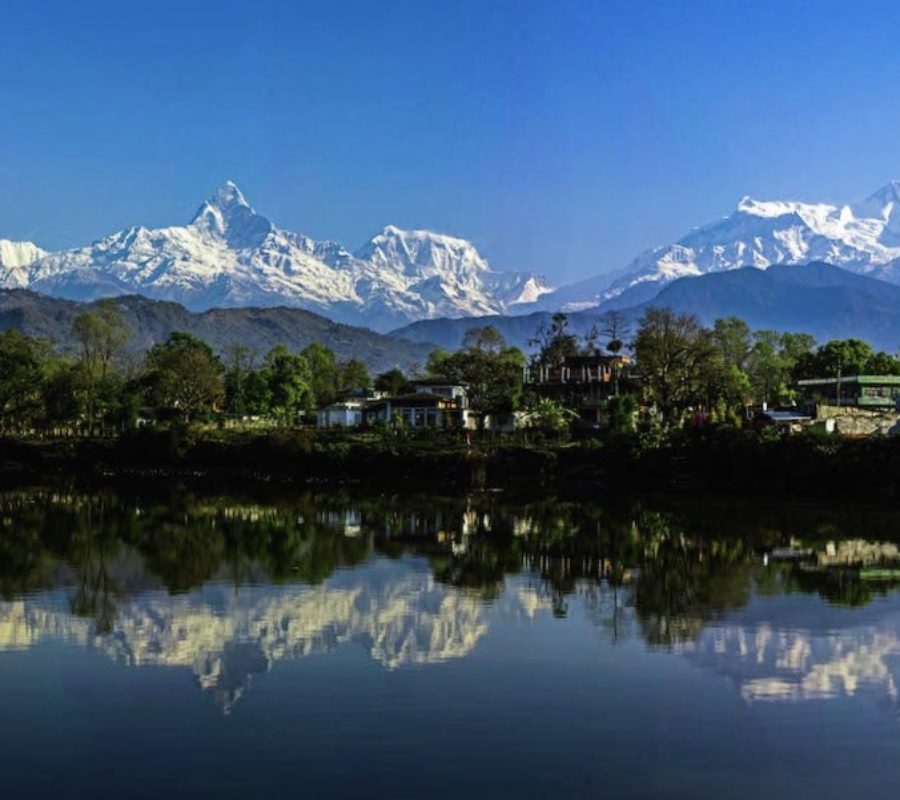
    Annapurna view from Pokhara

    Magnificent view of Annapurna Himalayas

    Day 3 – Pokhara to Tatopani (115 km, 6 hrs)

    We departed early, riding along the Baglung Highway to Beni, pausing for lunch before tackling the rougher mountain terrain toward Tatopani. Flanked by Dhaulagiri (8167 m) and Annapurna (8091 m), this route offered breathtaking views.

    Tatopani, famous for its natural hot springs, was a rejuvenating stop and an ideal place to rest before the high Himalayan section of our tour.

    Day 4 – Tatopani to Kagbeni (75 km, 5 hrs)

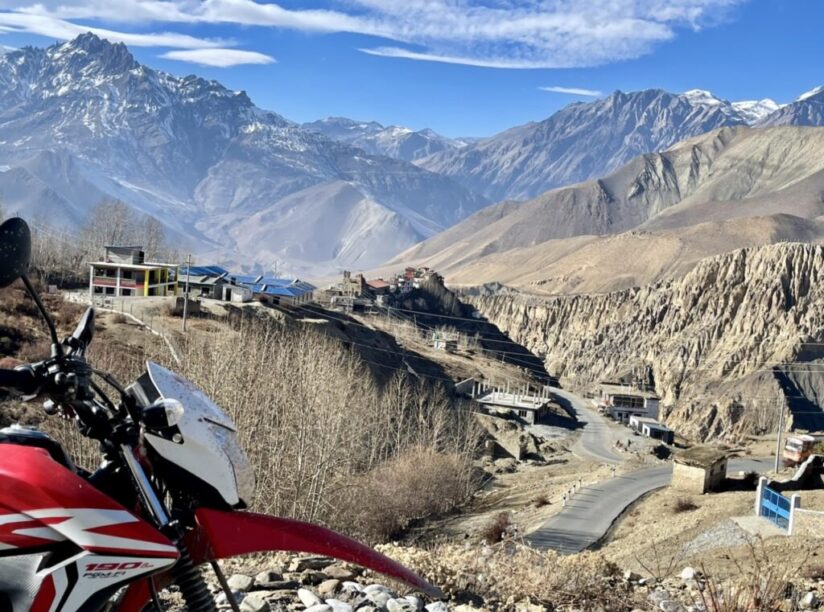
    View from Lete while enroute to Jomsom

    Heading north into the Himalayan region, the landscape transformed dramatically. Riding off-road through rugged terrain, we arrived at Kagbeni, a serene village marking the gateway to Upper Mustang and Muktinath. The tranquility of the village, surrounded by towering mountains, made it a perfect overnight stop.

    Day 5 – Kagbeni to Muktinath & Jomsom (55 km, 5 hrs)

    After exploring Kagbeni, we rode toward Muktinath, an important pilgrimage site for Hindus and Buddhists. The narrow, black-topped road offered smooth but scenic riding, with views of Nilgiri Himalaya and the Kali Gandaki River.

    We strolled through the town, interacted with locals, and even purchased ancient ammonite fossils as souvenirs. Later, we descended to Jomsom, a charming town at 2743 m, with views of Annapurna, Nilgiri, and Dhaulagiri peaks.

    Day 6 – Jomsom to Tatopani (85 km, 6 hrs)

    Morning in Jomsom greeted us with spectacular Himalayan vistas. Riding back to Tatopani, we passed Marpha, known for apples, and Himalayan settlements like Lete and Ghasa. Relaxing in the hot springs at Tatopani was an excellent way to recover after a long day.

    Day 7 – Tatopani to Pokhara (125 km, 5 hrs)

    Our ride back to Pokhara along paved roads offered a welcome relief from rugged mountain trails. In Pokhara, we enjoyed lakeside exploration, pubs, and friendly local interactions, all while the towering Himalayan peaks reminded us of the epic journey we had completed.

    Day 8 – Pokhara Sightseeing (29 December 2022)

    We spent the day exploring Pokhara’s natural treasures:

    • Davies Falls, a hidden gem
    • Gupteshwari Mahadev Cave, a mystical underground site
    • Hilltop viewpoints providing panoramic vistas of the Annapurna Himalayan ranges and surrounding valleys

    Pokhara perfectly captured the beauty and diversity of Nepal’s landscapes.

    Day 9 – Pokhara to Kathmandu (30 December 2022)

    Our final ride along the river valley back to Kathmandu marked the conclusion of our journey. Bikemandu arranged a farewell BBQ, a group photo, and commemorative tour T-shirts. The adventure not only tested our riding skills but also strengthened friendships and created lifelong memories.

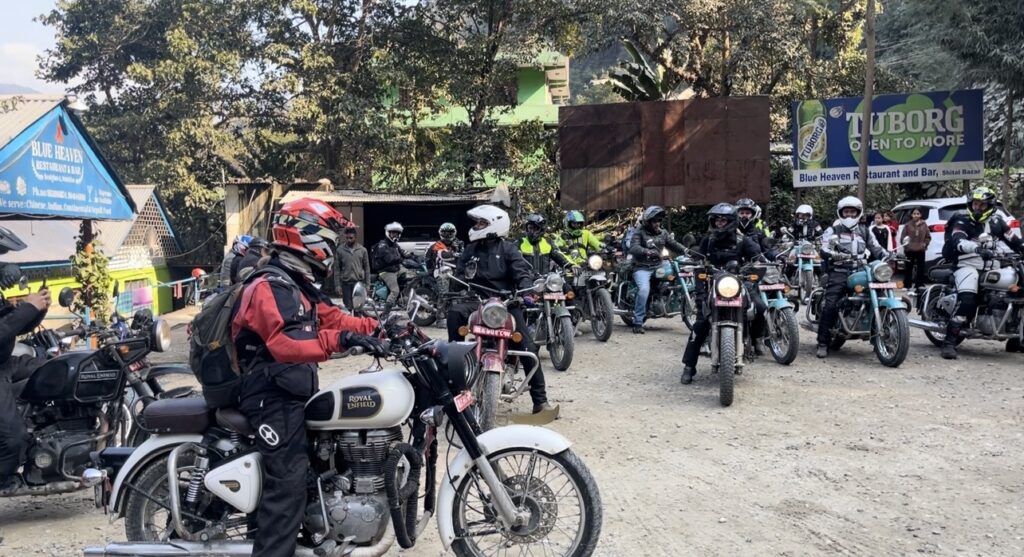
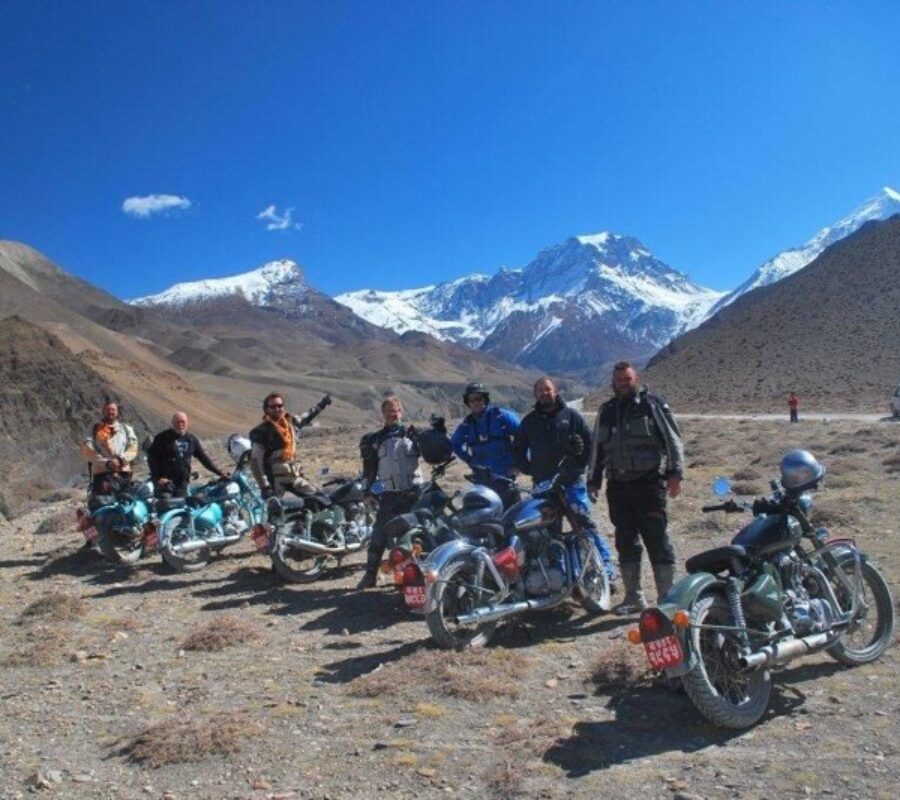
    Royal Enfield Riders Group Nepal

    Riders ready for the ride

    Day 10 – Departure (31 December 2022)

    Our guide ensured smooth check-out and accompanied us to Tribhuvan International Airport, sending us off with warm Nepalese hospitality — a perfect ending to a once-in-a-lifetime adventure.

    Tips for Riders on Himalayan Motorcycle Tours

    • Winter gear is a must: warm jackets, gloves, and sleeping bags
    • Bring binoculars and head torches
    • Carry light snacks and energy foods
    • Cash is essential in remote Himalayan regions; ATMs are limited
    • Small gifts like toffees delight local children and villagers

    Why Bikemandu Is the Top Choice for Motorcycle Adventures in Nepal

    Bikemandu ensures that Nepal motorcycle tours are safe, well-supported, and unforgettable. With professional guides, support vehicles, and carefully planned routes, riders can focus on adventure and exploration.

    Exploring Lower Mustang and the Annapurna region was a life-changing experience, offering breathtaking landscapes, rich culture, and challenging rides. For anyone looking to experience the Himalayas on two wheels, I highly recommend joining a Bikemandu motorcycle tour It’s a journey you’ll remember forever.

    Thank you Bikemandu Nepal!

    By Sam Wilson (United Kingdom)

    Ride the Himalayas: Nepal’s Ultimate Motorcycle Challenge

    Where Adventure Touches the Sky

    Nepal isn’t just a destination — it’s a rider’s playground carved by nature and culture. Ride the Himalayas Nepal motorcycle tour adventure with us.

    Every twist of its rugged roads tells a story: jungle humidity, roaring rivers, endless switchbacks, and snow-clad peaks.

    If you’ve ever dreamed of riding where the road meets the clouds, Nepal is your ultimate motorcycle challenge — pure, raw, and unforgettable. Seeour epic tours here, rent a bike or Ride & Trek Everest Base Camp.

    Why Nepal Is the Real Home of Motorcycle Adventure

    Few countries offer so much variety in such short distances. Within a day, you can ride from steaming tropical lowlands to icy mountain passes higher than the Alps.

    This natural diversity makes Nepal one of the most rewarding adventure-riding destinations on Earth.

    But Nepal’s magic goes beyond the terrain. It’s the rhythm of life on the road — Buddhist prayer flags fluttering above you, monks offering blessings at roadside monasteries, and kids cheering as you ride through villages. Every moment feels real, grounded, and earned.

    Discover our guided tours – experience authentic Himalayan rides with expert local guides.

    The Three Faces of Riding in Nepal

    1. The Terai – Jungle Roads and Wild Energy

    Begin in the southern plains where the air is warm and the roads run through dense forests, rice paddies, and wildlife reserves.

    It’s the perfect warm-up ride — open highways, friendly locals, and the thrill of spotting rhinos or elephants near Chitwan National Park.

    2. The Mid-Hills – Twists, Culture, and Classic Views

    The mid-hills are the heart of Nepal. Here, roads climb and twist through terraced farmlands, suspension bridges, and pine forests.

    The scenery changes by the minute — and so does the riding. Expect everything from paved switchbacks to rocky climbs, all surrounded by stunning views of the Himalayas.

    3. The High Himalayas – Ride Above the Clouds

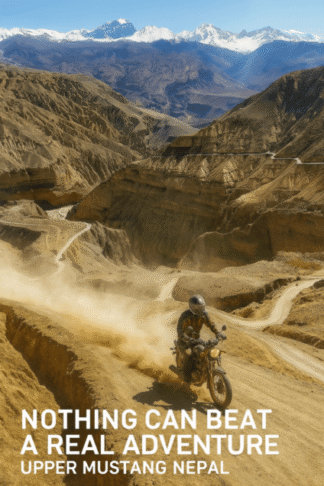
    Push beyond the tree line, and the landscape becomes almost lunar. Upper Mustang, Muktinath, and Lo Manthang bring you into Nepal’s ancient Himalayan deserts — dramatic, silent, and surreal.

    The high-altitude air is thin but electric with energy. Every turn feels like you’re touching the edge of the world.

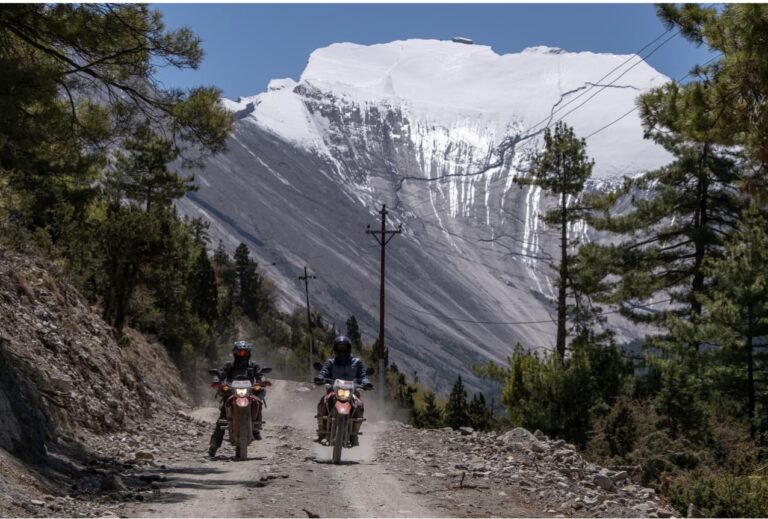
    Motorcycle Adventure in Manang, Annapurna Region, Nepal

    Explore our Mustang Motorcycle Tour – the ultimate ride through Nepal’s forbidden kingdom.

    The Feeling: From Jungle Heat to Frozen Peaks

    A Himalayan ride is more than just miles — it’s a journey through climates, cultures, and emotions.

    You start with the buzz of warm air and forest scents, climb into crisp mountain breezes, and end surrounded by silence at high altitude.

    Every ride is a test of endurance, freedom, and discovery.

    You’ll sweat, smile, and maybe even struggle — but when you crest a mountain pass and see the Himalayas stretching forever, you’ll know exactly why riders call Nepal the ultimate adventure.

    What to Bring for a Himalayan Motorcycle Ride

    Preparation makes all the difference. Here’s what every serious rider packs for the Himalayas:

    • Protective gear: CE-rated helmet, waterproof jacket, layered thermal clothing, quality gloves, and sturdy boots.
    • Bike essentials: spare tubes, chain lube, cables, repair kit, and a basic tool roll.
    • Navigation & power: offline GPS maps, power bank, and local SIM card.
    • Personal & health: sunscreen, first-aid kit, altitude medicine (consult your doctor), and water purification tablets.
    • Documents: valid licence, travel insurance, and permits for restricted regions (like Upper Mustang).

    Travel light — the Himalayas reward smart packing and steady riding.

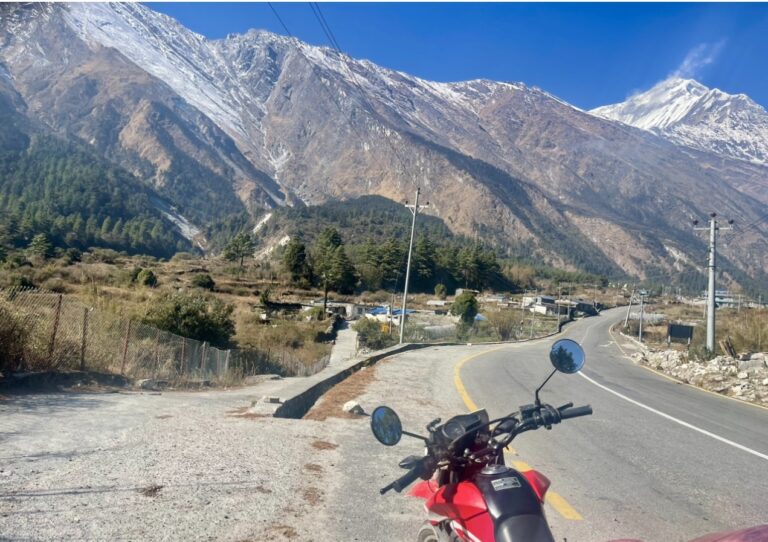
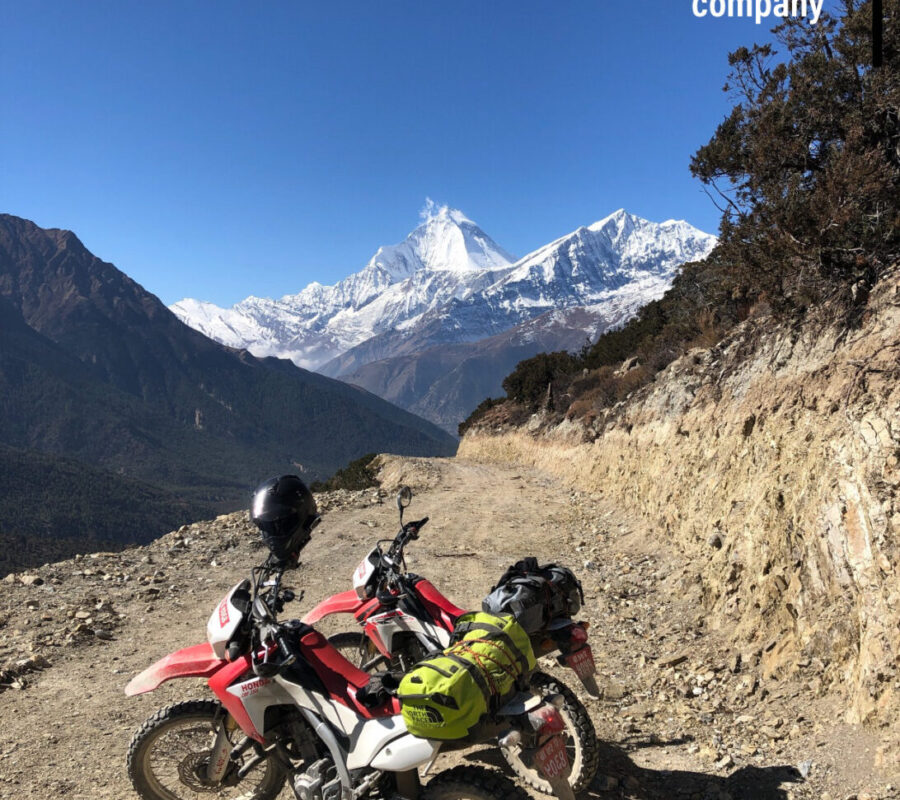
    Honda CRF250 in Annapurna Region, Nepal
    Honda CRF250 in Annapurna Region, Nepal

    When and How to Ride

    • Best Months: March–May (Spring) and September–November (Autumn) for clear weather and stunning visibility.
    • Ideal Bikes: Mid-size adventure and dual-sport motorcycles — Royal Enfield Himalayan, Honda CRF, or KTM Adventure are perfect choices.
    • Best Way: Ride with trusted local experts who handle routes, permits, and logistics — so you can focus on the road and the view.

    Plan your Himalayan Ride with Bikemandu – our team handles every detail from permits to support vehicles.

    Why Ride with Bikemandu

    At Bikemandu, we’re not just tour operators — we’re riders who’ve lived and breathed these mountains.

    Our team crafts authentic Himalayan motorcycle experiences that blend adventure, culture, and safety. Whether you want a fully guided tour or a custom expedition, we make sure your ride becomes the story you’ll never stop telling.

    Ready to Ride the Himalayas?

    If your idea of freedom is two wheels, open roads, and mountains that touch the sky — Nepal is calling.

    Join us and discover why the Himalayas are not just a place to ride — they’re a place to feel alive.

    🔗 Start Your Adventure: Book your Himalayan Motorcycle Tour with Bikemandu

    Author: Bikemandu Nepal

    Nepal Travel Guide: Trekking, Culture & Riding Tips

    Introduction

    Bikemandu Travel offers detailed information about amazing travel spots in Nepal. Our guidebook covers both popular and lesser-known destinations in this small country. For over 10 years, we’ve helped travellers experience everything from relaxing holiday spots to challenging adventure trails. We provide a clear picture of what to expect at your destination and make sure you’re well-prepared before you start your journey.

    Our guide includes trekking and tours to high mountains, wildlife in national parks, heritage sites, ancient cities, countryside experiences, food, and culture. Travelling in Nepal is unique because of its mix of cultures, ethnic groups, religions, and natural diversity, including varied landscapes, and a wide range of plant and animal species. Many trekking routes in Nepal were once part of ancient trade routes across Asia, making the country a melting pot of cultures from China and India. Our experienced team will guide you through this fascinating land.

    We know that riding or trekking in Nepal’s high mountains can be challenging, so we guide you on the right tools and equipment. Our guides have over five years of experience and are skilled in making quick decisions in extreme situations. If our advice isn’t enough, your guide will provide precise information during your journey.

    Key points and Facts

    1. Be prepared for a developing country: You may see poverty and street children. Avoid giving money directly as it encourages begging. Donate to reputable organizations instead.
    2. Friendly locals: Most Nepalis are warm and helpful. While a small percentage may try to take advantage of you, the majority will genuinely try to assist.
    3. Facilities in major cities: Cities like Kathmandu and Pokhara have better food and accommodation services. You can buy riding or trekking gear there, so you don’t need to bring everything.
    4. Solo travel: Nepal is generally safe for solo travelers, but always follow safety precautions. Avoid walking alone at night, don’t get drunk alone, and always be aware of your surroundings. Keep in touch with someone about your location.
    5. Respect local culture: Nepal’s culture, religion, and beliefs are deeply rooted. Festivals and traditions are important, and respecting them is essential.
    6. Sanitation: Sanitation is poor in Nepal, especially in cities like Kathmandu. The air is fresher in the countryside. Tourist areas are generally cleaner, but water and electricity shortages can be common in remote mountain areas.
    7. Travel delays: The mountainous terrain and winding roads can make travel time unpredictable. Delays are common, and air travel, though faster, can be expensive with frequent weather-related issues.
    There are also tourist police available in Nepal to help with any crime-related issues. You can contact them by dialing 1144 anywhere in Nepal or reach the Nepal police headquarters at +977-14247041.

    Do’s and Don’ts in Nepal

    Do’s
    • Greet with a Namaste: This is the traditional way of greeting in Nepal, with palms pressed together.
    • Explore beyond the obvious:  Nepal is famous for trekking to Everest Base Camp, but there are many other amazing experiences to explore.
    • Get in shape: Treks above 3000m can be physically demanding. Regular exercise before your trip will help you enjoy it more.
    • Respect local customs: Nepal’s traditions have deep historical roots. Be respectful, and if curious, ask politely about their customs.
    • Smile and interact: The people in the Himalayas are known for their warmth and smiles. Share your stories and enjoy the moments with them.
    • Feel at home: Don’t be shy around locals. They are friendly and will appreciate your help with daily chores.
    • Feel at home: Don’t be shy around locals. They are friendly and will appreciate your help with daily chores.
    • Travel for the experience:  Enjoy every moment, even if things don’t go as planned. Unpredictable events are part of the adventure.
    • Equip yourself: Bring the right gear for your trek to handle the unpredictable mountain weather. Check our clothes and equipment page for more details.

    Don’ts
    • Don’t drink tap water: It is safer to drink boiled or purified water, especially in the mountains.
    • Mind your food manners: Avoid touching others’ food or offering food from your plate. Drink from common pots without letting your lips touch them.
    • Don’t be too touchy: Avoid touching people without permission, especially women or those on their way to religious sites. Greet with a Namaste instead.
    • Use your right hand:  In Nepal, it’s customary to use your right hand for eating, passing things, or receiving items from others.
    • Respect religious places: Remove your shoes before entering homes, temples, or monasteries. Follow local customs, such as walking clockwise around Buddhist sites.
    • Avoid public displays of affection:  Romantic gestures in public are considered inappropriate.
    • Keep calm: Raising your voice is seen as disrespectful in Nepal.
    • Don’t support illegal wildlife trade: Avoid buying products like ivory or fur from endangered species. This contributes to illegal activities, and you may not be allowed to take these items home.
    • Don’t encourage begging: Instead of giving money to children or beggars, donate to charities or school

    Altitude Sickness: AMS

    When riding or trekking in the high mountains of Nepal, you may experience altitude sickness, known as Acute Mountain Sickness (AMS), due to the lower oxygen levels at high altitudes. AMS typically occurs above 3000m and can cause symptoms like light-headedness, nausea, and headaches. While some mild symptoms are normal, severe symptoms like persistent headaches, vomiting, hallucinations, or breathlessness can indicate serious AMS.

    To prevent AMS, it’s essential to acclimatize properly, avoid rapid ascents, and stay hydrated. If symptoms worsen, it’s recommended to descend to a lower altitude. Carry Diamox (after consulting your doctor) to help alleviate symptoms. Always follow your guide’s advice and avoid trekking alone. Bikemandu provides experienced guides who are trained to handle health issues on treks. It’s also advisable to consult your doctor before your trip for a health check and advice on altitude sickness.

    Clothes and Equipment

    Packing the right gear is as important as planning your itinerary. The equipment you bring can either be your strength or weakness. Here’s a list of essential items for a successful trek:

    • Bags and Rucksacks: Personal supplies: Snack bars, toiletries, sunscreen, lip balm, camera, and a notebook.
    • Day pack: To carry water, a warm jacket, rain gear, camera, sunscreen, and medicine. A hip belt helps reduce shoulder strain.
    • Sleeping bag: Essential for cold nights at high altitudes. Choose one that is light and warm.
    • Headwear: Hat and sunglasses: For sun protection. If you wear contact lenses, bring extra glasses.
    • Body:
      • T-shirts and long-sleeved shirts: Preferably quick-drying synthetic materials.
      • Down/fleece layers and waterproof jackets: To keep warm and dry.
    • Legwear:
      • Lightweight trousers and shorts: Quick-drying materials are ideal.
      • Waterproof over-trousers: Breathable materials are best.
    • Footwear:
      • Trekking boots, trainers, Sandals: Sturdy and comfortable options.
      • Gaiters: For wet days.
      • Socks and Underwear:
        • Thin socks: For comfort.
        • Underwear: As needed.

    Miscellaneous:

    • Torch or headlamp: With extra bulbs and batteries.
    • Towels: Quick-drying.
    • Water purification tablets: For safe drinking water.
    • Medical supplies: Including blister pads, pain relievers, antiseptic cream, and any prescribed medications.

    Nepal Travel FAQs

    1. How can I get to Nepal?

    You can reach Nepal by flight or by road. Major airlines like Qatar Airways, Turkish Airways, Fly Dubai, British Airways, and others fly to Nepal. The only international airport “Tribhuvan International Airport” is in Kathmandu. You can also enter Nepal by road through borders with India or China/Tibet, with entry points like Birgunj, Bhairahawa, and Kakarvita. Travelling by tourist bus is recommended for a comfortable journey.

    2. Can I get a visa on arrival in Nepal?

    Yes, you can get a visa on arrival at Tribhuvan International Airport in Kathmandu. You’ll need to fill out a form, bring USD cash, and two passport-sized photos.

    3. Is Nepal politically stable? Is it safe to travel alone, especially for women?

    Nepal has multiple political parties, leading to occasional conflicts and strikes, but these don’t usually affect daily life. Nepal is considered safe for solo travellers, including women. The local people are friendly, and our team will ensure your safety.

    4. When is the best time to visit Nepal?

    You can visit Nepal year-round for cultural tours. However, for trekking and expeditions, spring and autumn are the best seasons. Check our trekking seasons page for more details.

    5. Is it safe to travel solo in Nepal?

    Yes, Nepal is a safe country for solo travellers, including women. Crime in the tourism sector is low, and locals are welcoming. Our team will also support you throughout your trip to ensure your safety.

    6. Do you offer airport pickup and drop-off services?

    Yes, if you’ve booked a guided trip or book the services with us, airport pickup and drop-off are included. We’ll take you to and from your hotel in Kathmandu.

    7. Do you arrange flights, hotel bookings, and other services?

    Yes, we can arrange domestic and international flights, hotel bookings, and other services as per your trip itinerary.

    8. What should I expect on a travelling and trekking trips in Nepal?

    Travelling in Nepal is fun and memorable while you ride solo or in a group, you will see awe inspiring nature and cultural heritage and experience heartwarming hospitality of Nepal. Trekking in Nepal is a challenging and rewarding experience. You’ll trek 2-8 hours a day through remote villages and forests with stunning mountain views. Most routes have small teahouses for rest stops. The only area without teahouses is Upper Dolpo, where camping is required.

    9. Who will guide my trip?

    We have a group of experienced professionals to guide you, who are local Nepali but speaks good English and has extensive experience of respective fields. Our guides are knowledgeable about the region and are trained in first aid, mountaineering, leading and eco-trekking.

    10. How many people can join a trip?

    We accept groups of any size for trekking, riding or driving. We organise Larger groups to be accommodated with extra arrangements. We also welcome solo travellers, except in remote areas like Mustang and Dolpo, where a minimum of 2 people is required.

    11. What insurance do I need before visiting Nepal? Can I get insurance there?

    You should arrange travel insurance before coming to Nepal. It should cover potential injuries, accidents, or illnesses during your trip. We do not provide insurance services.

    12. How high can you take me?

    We can take you as high as you want, including arranging helicopter tours for those who prefer not to trek, ride or drive but still want amazing views.

    13. What equipment do I need? Do I need to bring it?

    You’ll need trekking shoes for trekking, optional riding gears for riding, comfortable clothing, and personal gear. We can provide sleeping bags, down jackets, tents, and cooking equipment if needed. Check our clothing and equipment page for more details.

    14. Can I ride or trek in the Himalayas without prior experience?

    Yes, we offer rides or treks suitable for all experience levels. We’ll help you choose the best option based on your fitness and preferences.

    16. Is the food and water safe in lodges and camps?

    Yes, we ensure that the food and water in lodges and camps meet high hygiene standards. Drinking water is boiled or purified, and the food is often organic and locally sourced.

    17. Are your staff fully equipped and insured?

    Yes, our staff are well-equipped for their tasks and fully insured. We provide them with the necessary clothing and tools, and we prioritize their safety.

    18. What souvenirs can I bring from Nepal?

    Popular Nepali souvenirs include handicrafts, traditional art, pashmina shawls, and musical instruments like the bansuri, madal, and sarangi.

    19. Are there ATMs in Nepal?

    Yes, there are many ATMs in major cities and towns. They accept VISA, MasterCard, and American Express. Carry some cash if you’re traveling to rural areas.

    20. How can I stay healthy while traveling in Nepal?

    Eat well-cooked food, drink boiled or bottled water, and avoid street food. The city air can be polluted, so wearing a mask is advised. Consider getting vaccinated for diseases like Japanese Encephalitis if traveling through forests.

    21 . How can I ensure my safety in Nepal? Are there tourist police?

    Be aware of your surroundings and follow local guidelines. If you need help, contact the tourist police, who are available in various locations in Nepal.

    22. Can I bring my medication with me?

    Yes, bring your prescribed medication in its original container along with a prescription to avoid any issues during inspections.

    Plan Your Nepal Adventure Today!

    Enquire Now
    View Our Tours

    https://bikemandu.com/destination/nepal

    https://bikemandu.com/destination/uk

    https://bikemandu.com/destination/bhutan

    https://bikemandu.com/destination/india

    https://bikemandu.com/upcoming-tours
    View Our Motorcycles

    https://bikemandu.com/mycategory/bike